Quarterly Publication

                          Journal Metrics

Number of Volumes 10
Number of Issues 37
Number of Articles 220
Article View 242292
PDF Download 158,201
View Per Article 1101.33
PDF Download Per Article 719.1
Acceptance Rate 47
Time to Accept (Days) 108
Number of Indexing Databases 14
Number of Reviewers 244
Impact Factor (ISC)-2020 0.042


Call for Papers

We proudly announce that the journal of Petroleum Business Review (PBR) has been granted temporary permission for publication from the Ministry of Science, Research and Technology of Iran. It should be mentioned that PBR is granted the status of “Academic-Research”. The journal is to be published quarterly in English.

We hereby call for papers in Petroleum Business studies. We invite all scholars to submit their articles for review and publication to the journal. More information about guidelines for submission and the policy of the journal is provided here. Only articles received online through the website will be sent for referees.


Petroleum Business Review journal follows rules and guidelines defined by Committee on Publication Ethics(COPE)


All submitted manuscripts are checked for similarity through a trustworthy software named iThenticate to be assured about its originality and then rigorously peer-reviewed by the international reviewers.

-------------------

  • Country of Publication: Iran      
  • Publisher: Petroleum University of Technology
  • Format: Online
  • Print ISSN: 2645-4726
  • Online ISSN: 2645-4734
  • Available from: Open access
  • Acceptance Rate: More of 45%
  • Frequency: Quarterly
  • Advance Access: open access
  • Language: English
  • Scope: Oil & Gas Management, Financing, Law, Accounting, Economics, Energy
  • Article Processing Charges: Free
  • Type of Journal: Academic-Research
  • Open Access: Yes
  • Policy: Double Blind Peer Review Confirmation
  • Review Time: 2 to 3 months
  • Contact E-mail: pbr@put.ac.ir   

-------------------

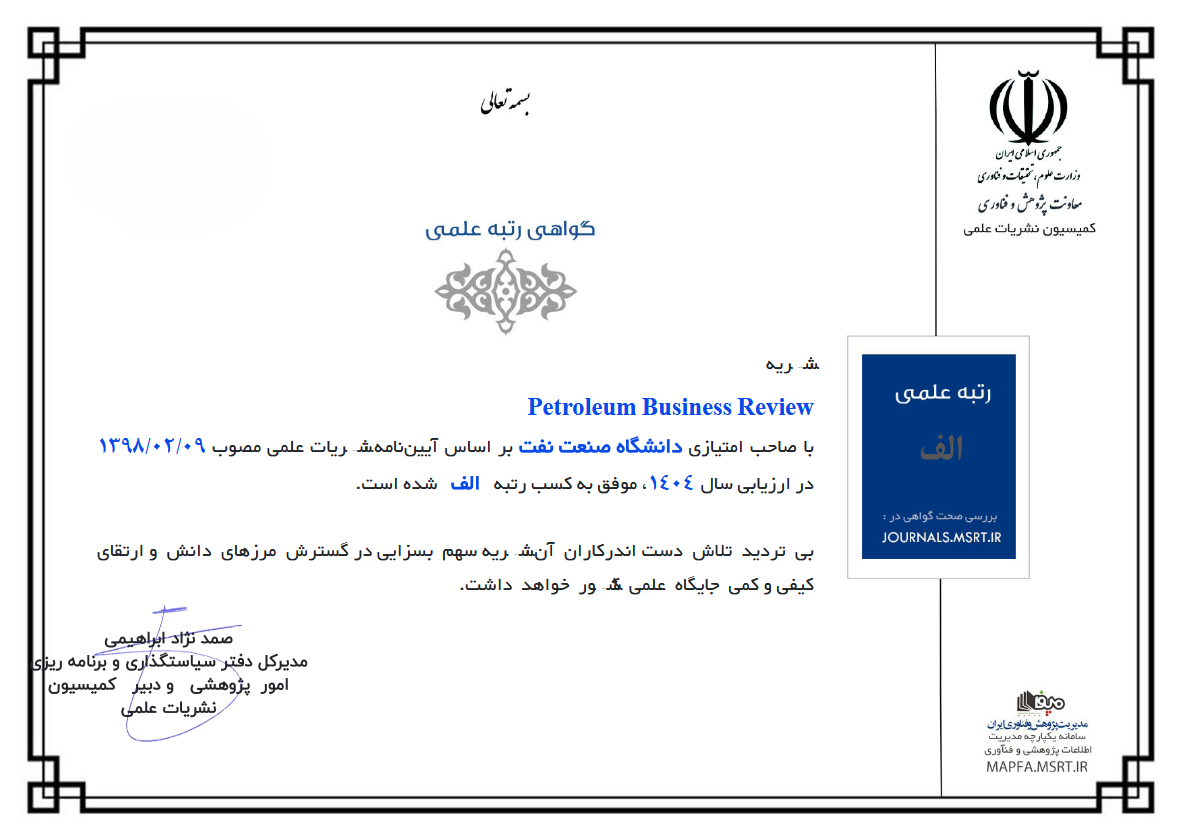
The publication's rank in the Ministry of Science (Evaluation 2023-24): A   


-------------------

Original Article Law Studies

Distinguishing Contractor Pacing from Concurrent Delay in Oil and Gas EPC Projects

https://doi.org/10.22050/pbr.2026.598560.1457

Farhad Iranpour, Mohammad Chalabi

Abstract A contractor facing an employer-caused critical delay may rationally reduce the pace of unaffected work rather than continue deploying labour, equipment, and finance at the original rate. This practice, commonly described as strategic pacing, becomes legally contentious when the employer later characterises the slowdown as an independent contractor delay and invokes concurrency to resist compensation or impose delay consequences. Existing approaches identify pacing as a conscious response to another delay, but they do not provide a sufficiently integrated test for distinguishing a legitimate resource-management decision from opportunistic underperformance. This article develops a legal–economic framework for classifying contractor slowdown in oil and gas engineering, procurement, and construction projects. It combines doctrinal analysis of concurrent delay, critical-path causation, mitigation, and notice with transaction-cost and incentive analysis. The framework is then examined through three representative project scenarios involving pipeline access, offshore installation approvals, and long-lead refinery equipment. The article proposes a three-stage test: first, whether the slowdown was causally dependent on an established employer-risk event; second, whether it produced additional critical delay beyond that event; and third, whether the contractor’s conduct was timely disclosed, documented, proportionate, and reasonably reversible. The resulting classification distinguishes legitimate pacing, defective or excessive pacing, and opportunistic slowdown. The framework offers a more disciplined basis for allocating extensions of time, prolongation costs, and delay damages while discouraging both wasteful resource deployment and strategic manipulation of concurrency.

Original Article Oil and Gas Economics and Management

The Strategic Position of the Strait of Hormuz in the Global Oil Trade Network: An Analysis of Centrality, Dependency, and Connectivity Structure

https://doi.org/10.22050/pbr.2026.607898.1474

ali fakour

Abstract The Strait of Hormuz is a major chokepoint in global crude oil trade, yet its structural position and the implications of disruptions for the global oil-trade network remain insufficiently quantified. This study examines the strategic position of the Strait of Hormuz using complex network analysis, focusing on network centrality, trade dependence, and connectivity. A directed, weighted crude oil-trade network comprising 17 key countries and regions is constructed using bilateral trade data from UN Comtrade for 2025 and 2026. Degree, betweenness, and closeness centrality are used alongside indicators of dependence on the Strait of Hormuz and overall network connectivity. In the 2025 baseline network, Saudi Arabia and Iraq exhibit the highest betweenness centrality scores, at 0.72 and 0.58, respectively. Following the disruption in February 2026, network efficiency declined by 30.8%, average path length increased by 42.6%, and the size of the largest strongly connected component decreased by 35.7%. The results further indicate substantial differences among oil exporters in their capacity to reroute trade through alternative infrastructure. These findings demonstrate how disruptions at a major maritime chokepoint can alter the structure and connectivity of global crude oil trade. The study contributes to the quantitative assessment of maritime chokepoint significance by integrating network centrality, trade dependence, and connectivity measures.

Original Article Energy Management and Engineering

A Case Study on Economic Resilience Assessment of a Polyethylene Production Process Under Sanction Scenarios: A Risk-Based Approach

https://doi.org/10.22050/pbr.2026.592013.1450

Masoud Khajenoori

Abstract This study presents a quantitative assessment of economic resilience for a 400000 ton/yr LLDPE production plant under five sanction scenarios. A risk-based framework is developed incorporating NPV, IRR, payback period, and a novel Economic Resilience Index (ERI). Monte Carlo simulation (5,000 iterations) with Log-Normal distributions captures market uncertainty. A critical finding is that the project yields a negative baseline NPV of -66.14 M$ even under normal conditions. The analysis is therefore framed as a relative loss analysis, not as an assessment of sanction impact on a viable project. Under mild sanctions, the loss increases by 240% in relative terms (from -66.14 M$ to -225.08 M$). The revised Economic Resilience Index (ERI), derived directly from financial model outputs, declines from 0.62 (baseline) to 0.00 (critical sanctions). The coefficient of variation decreases from 1.108 to 0.085; however, this apparent reduction in uncertainty is an artifact of the increasingly negative mean NPV, and the absolute standard deviation actually increases from 71.50 M$ to 100.50 M$, indicating that sanctions amplify rather than reduce uncertainty. Design flexibility analysis shows that an integrated design (ERI = 0.81) outperforms single-feedstock configurations (ERI = 0.45). The proposed ERI provides a practical tool for risk-informed decision-making in Iran's petrochemical sector, highlighting the necessity of incorporating geopolitical risk into investment appraisal frameworks.

Original Article Oil and Gas Economics and Management

Production Sharing Contracts in Iran’s Joint Petroleum Fields: Distinguishing Produced Petroleum Entitlements from Reservoir Ownership

https://doi.org/10.22050/pbr.2026.589257.1446

Iman Jahandari, Abbas Kazeminajafabadi, Aatefe Taklif

Abstract This study examines the legal feasibility of employing Production Sharing Contracts (PSCs) in Iran’s shared oil and gas fields under Paragraph (a) of Article 44 of the Seventh Development Plan Law, focusing on the distinction between state ownership and sovereignty over petroleum reservoirs and investors’ contractual entitlements to produced petroleum. The study adopts a qualitative-dominant doctrinal approach combining Islamic jurisprudential–legal analysis with exploratory expert assessment. In the qualitative stage, relevant legal and jurisprudential sources were examined alongside semi-structured interviews with 14 purposively selected experts. Thematic analysis identified a central concern: the potential recharacterization of an investor’s contractual production entitlement as a direct or quasi-proprietary interest in the underlying reservoir, petroleum in place, or reserves. This finding was reviewed through member checking and peer review and informed the development of a single five-point Likert-scale item. In the quantitative stage, 11 experts assessed the issue descriptively using the interquartile range (IQR) and percentage agreement. The results showed substantial divergence (IQR = 2.00; 36.4% in the high/very-high categories), with no consensus achieved. The survey is therefore exploratory and illustrative rather than a validated or generalizable measure. The doctrinal and jurisprudential analysis, as the primary contribution, indicates that PSCs are not inherently incompatible with public ownership and sovereignty where investors’ rights are strictly confined to produced petroleum and exclude any proprietary interest in the reservoir or petroleum in place.

Law Studies

The Taking Over of a Foreign Investor’s Property by the Host State in International Petroleum Agreements: How International Arbitration Practice Responds

Volume 5, Issue 2, Spring 2021, Pages 75-86

https://doi.org/10.22050/pbr.2021.277665.1175

Hamid Reza Younesi

Abstract The present article aims to examine the risk of host governments’ interference with the property of foreign investors (expropriation) in the petroleum industry. Host states have the police power to make regulatory changes. The “police power” is defined as the inherent and plenary power of a sovereign to make all laws necessary and proper to preserve public security, order, health, morality, and justice. It is a fundamental power essential to government, and it cannot be surrendered by the legislature or irrevocably transferred away from government. The government can interfere with the contract, change the terms, or directly take the investment. This is why international petroleum disputes and arbitration practices have addressed such risk. For this purpose, the concept of property and compensable property rights under international law are significant. Indeed, expropriation conveys a deprivation of a property owner of this property. This paper assesses the concept of expropriation, the international legal requirements for a lawful expropriation, and then analyzes the relevant international arbitral awards in petroleum jurisprudence.  

Law Studies

Indirect Expropriation in the Petroleum Industry: The Response of International Arbitrations

Volume 5, Issue 4, Autumn 2021, Pages 1-10

https://doi.org/10.22050/pbr.2021.278306.1176

Hamid Reza Younesi

Abstract The present article aims to argue indirect expropriation in international petroleum agreements and analyze the response of international arbitrations. In particular, international arbitral awards by the Iran–US claims tribunal, the Yukos case as an energy charter treaty arbitration, and certain North American Free Trade Agreement cases have been examined. The recent trend shows that taking foreign investors’ property may occur not only through legislation or nationalization but also by indirect methods that can have the same effect as direct expropriation. Indirect expropriation does not necessarily require the transfer of legal title from the international oil company to the host state. Hence, it is difficult to distinguish between legitimate regulation and measures that are tantamount to expropriation with the payment of compensation. Identifying an indirect expropriation is complex and depends upon the examination of the legitimate expectations of the investor concerning the enjoyment of its investment. Host governments may employ different methods to achieve what amounts to direct taking, but without acknowledging it as such, to avoid legal consequences of expropriation and then payment of compensation

Oil and Gas Economics and Management

Energy Programs of American Parties (Republicans and Democrats) and Global Oil Market

Volume 3, Issue 4, Autumn 2019, Pages 28-36

https://doi.org/10.22050/pbr.2019.119151

Seyyed Abdollah Razavi, Shohreh Pirani

Abstract The United States is the world's first producer and consumer of oil and play a special role in international oil market relations. In a sense, due to the differences in the energy programs of the parties of this country, we will see significant changes in the international energy markets. The Trump's economic thinking in business field is based on the neo-mercantilist while the Democrats believe in global and multilateral trade. The most important energy policies of the Republican Party are the development and expansion of fossil fuel production, increasing the share of the oil market, lifting environmental restrictions, confronting OPEC, and unilateralism in the oil and gas trade. In contrast, the Democrats' most important plans in the US election are to return to the Paris Agreement and re-impose environmental restrictions, reduce oil production through legal sanctions such as taxes, expand renewable energy and use financial resources to manage the oil market and trade convergence. The main question of this article is what effect do US parties energy programs have on the oil market? The method of this research is a qualitative in a descriptive-analytical manner using desk research.

Oil and Gas Economics and Management

Crude Oil Price Hikes and Exchange Rate Volatility in Iran: Evidence from GARCH-family Models

Volume 9, Issue 4, Autumn 2025, Pages 43-63

https://doi.org/10.22050/pbr.2025.530147.1398

Vahid Mahmoudi, Hossein Arabi

Abstract This study investigates the impact of global crude oil price fluctuations on the volatility of the Iranian Rial–U.S. Dollar exchange rate over the period November 2011 to August 2025. Using daily data and employing GARCH-family models—including GARCH(1,1), EGARCH(1,1), and GJR-GARCH(1,1,1) under heavy-tailed distributions—we examine whether oil price shocks influence the mean and conditional variance of exchange rate returns. The results indicate that higher oil prices significantly appreciate the Rial, reflecting Iran’s dependence on oil revenues and foreign exchange inflows. Volatility dynamics reveal strong persistence, with shocks exhibiting long memory. Asymmetric effects are also evident: negative oil price shocks increase exchange rate volatility more than positive shocks, highlighting the destabilizing role of downturns in global oil markets. Diagnostic tests confirm the adequacy of the estimated models, with EGARCH and GJR specifications providing the best fit. The findings underscore three key policy implications. First, Iran’s exchange rate remains highly sensitive to oil revenues, reinforcing the need for structural diversification. Second, the persistence of volatility complicates short-term stabilization, demanding long-term reserve and fiscal policies. Third, the asymmetric impact of oil downturns calls for proactive risk management to mitigate volatility in times of declining oil prices. Overall, the study provides new evidence on the oil–exchange rate nexus in an oil-exporting economy, offering lessons for macroeconomic management under external shocks. Robustness checks — including Bai–Perron breakpoint tests and alternative model specifications with event dummies — confirm the main findings.

Oil and Gas Economics and Management

Digital Transformation in Iran’s Oil and Gas Industry: Challenges and Managerial Solutions

Volume 9, Issue 3, Summer 2025, Pages 70-85

https://doi.org/10.22050/pbr.2025.518977.1389

Mojtaba Ghorbani Asiabar, Morteza Ghorbani Asiabar, Alireza Ghorbani Asiabar

Abstract This study investigates the multifaceted challenges of implementing digital transformation within Iranian oil and gas companies, focusing on organizational barriers and managerial solutions. Despite the global momentum toward digitalization, Iran’s oil and gas sector faces unique obstacles, including resistance to change, skill gaps, legacy infrastructure, and insufficient alignment between technology providers and large enterprises. Utilizing a mixed-methods approach, we conducted a survey of 210 managers and IT professionals across upstream and downstream organizations, complemented by in-depth interviews with key stakeholders. Exploratory factor analysis (EFA) and structural equation modeling (SEM) were employed to identify and validate critical barriers and their interrelations. Findings reveal that organizational inertia, lack of digital competencies, and inadequate investment in digital infrastructure are the most significant impediments, while leadership commitment and targeted training programs emerge as effective managerial remedies. The study contributes actionable insights for policymakers and executives by outlining a roadmap for overcoming digital transformation hurdles and achieving sustainable competitive advantage. The results underscore the necessity of a holistic strategy integrating technological, human, and process dimensions to facilitate successful digital transformation in Iran’s oil and gas industry.

Energy Management and Engineering

Futures of Iran’s Oil and Gas: Scenarios by 2035

Volume 3, Issue 4, Autumn 2019, Pages 63-86

https://doi.org/10.22050/pbr.2019.119195

Mohammad Mottaghi

Abstract Iran is one of the most important oil and gas producing countries in the world with 153.8 billion barrels of crude oil and 33.5 billion cubic meters of gas accounting for 9.3% and 18% share of the total oil and gas reservoirs respectively. Rich hydrocarbon reservoirs along with a special geographical location are of the most important competitive advantages of Iran. The oil value chain has a special place in the social, economic structure and the level of the development of Iran. In policy-making, especially in global equations and in the long run, where uncertainty is an integral part, it is necessary to pay attention to this area. As a strategic knowledge, future studies can play an important role in mapping the future. In the current study, the possible and plausible futures of Iran’s fossil energies (oil and gas) in the 2035 horizon are presented in the form of four scenarios. In an environment where variables are dynamic and constantly changing, and uncertainty is high, using scenario building methods is preferable for long-term horizons. In this work, 30 drivers with a high uncertainty and impact on the future of Iran’s oil and gas were produced. Using the cross-impact analysis model and the balanced impact model, out of 41,472 possible scenarios, 10 scenarios with the maximum compatibility were obtained and presented in four scenarios: a clean scenario (low carbon), a bipolar Middle East scenario, a cooperation and development scenario, and a postponed dream scenario.

Energy Management and Engineering

Knowledge Management Pattern for Project-Based Organizations in Energy Industry: A Grounded Theory Study

Volume 2, Issue 2, Spring 2018, Pages 52-59

https://doi.org/10.22050/pbr.2018.91320

Masoume Amidi, Gholamreza Hashemzadeh, Aliakbar Alizadeh

Abstract Knowledge Management Pattern for Project -based organizations
using Grounded Theory (case study: Energy Industry)
One of the most crucial strategic challenges of organizations for achieving success and competitive advantage is related to knowledge management (KM) activities .Project based organizations(PBO) of Energy Industry is responsible for producing , retaining and using huge amount of knowledge . In order to manage it effectively , it is necessary to use a customized KM pattern of which is fit into specific factors of the PBOs. The main objective of this paper is to present a customized knowledge management pattern considering PBO charachteristics of the under investigated Engery Industry by using Grounded Theory (GT). Needed information is gathered by semi-structured interview with experts and reviewing recent papers.By using open ,axial and selective coding,components of final model and their relations are found. Results showed nineteen main concept and five secondary concepts which are formed in “reasonal situations”,”intervention situations”,”strategies”, “central components” and “effects

Energy Management and Engineering

Identify and Prioritize the Individual Value System and Decision-Making Styles and Examine their Relationship Case Study: Managers of Pars Special Economic Energy Zone (PSEEZ)

Volume 4, Issue 2, Spring 2020, Pages 63-79

https://doi.org/10.22050/pbr.2020.119283

Khashayar Pourmohammadshahini, Mokhtar Ranjbar

Abstract The present research seeks to assess the relationship between the Individual value system and decision-making styles. The statistical population (190 people) consists of Pars Special Economic Energy Zone (PSEEZ) Organization managers who were assessed using the Census Method. The Myers and Myers cognitive demographic and value systems questionnaire and Scott and Bruce’s decision-making questionnaire were used with a response rate of 90%.. Data was analyzed with the SPSS and Smart Planning softwares. It was found that the dominant Individual value system is success-oriented, followed respectively by system-oriented, realistic, tribal, community-oriented, and autocentric.Also, the dominant decision-making style in the statistical population is rational, followed by intuitive, dependent, avoidant, and spontaneous decision-making styles respectively. It was also concluded that success-oriented and tribal value systems had the most significant relationship with decision-making styles and the community-oriented value system the least. Only the individual variables of race (ethnicity) and field of study had a significant relationship with the Individual value system. The other personal and organizational variables had no significant relationship with the Individual value system. Creating motivation and a sense of employee participation in the future of the organization is proposed as the most important way of improving the value system of the statistical population so that the tendency to make spontaneous decisions can lean more towards making rational decisions to the same extent. Investigating the relationship between decision-making styles is another effective topic in improving these in an organization and is thus recommended to other researchers in the field.

Keywords Cloud

Related Journals